When I started, I imagined the whole process would be much simpler.
I thought: I’ll go to the municipality, register the apartment, pay the patent tax and then simply declare the income.
It turned out there was rather more to it.
Then came the question of how the income would be taxed, BULSTAT, social-security registration, registration under Article 97a of the Bulgarian VAT Act, an electronic signature and the regular returns.
If someone asked me today what they should do before they start taking bookings through Airbnb or Booking.com, the first thing I would say is:
Don’t start with the listing. Put everything else in order first.
I didn’t expect there to be so many steps either
At first, I thought the important things were to register the apartment, sort out ESTI and pay the patent tax.
Then I realised I also needed to understand how my income would actually be taxed.
After that came BULSTAT, social-security registration, Article 97a VAT registration, the electronic signature and the returns.
There were plenty of moments when I sat in front of the computer wondering:
‘Am I doing this properly?’
‘Was this how I was meant to submit it?’
‘Have I missed something?’
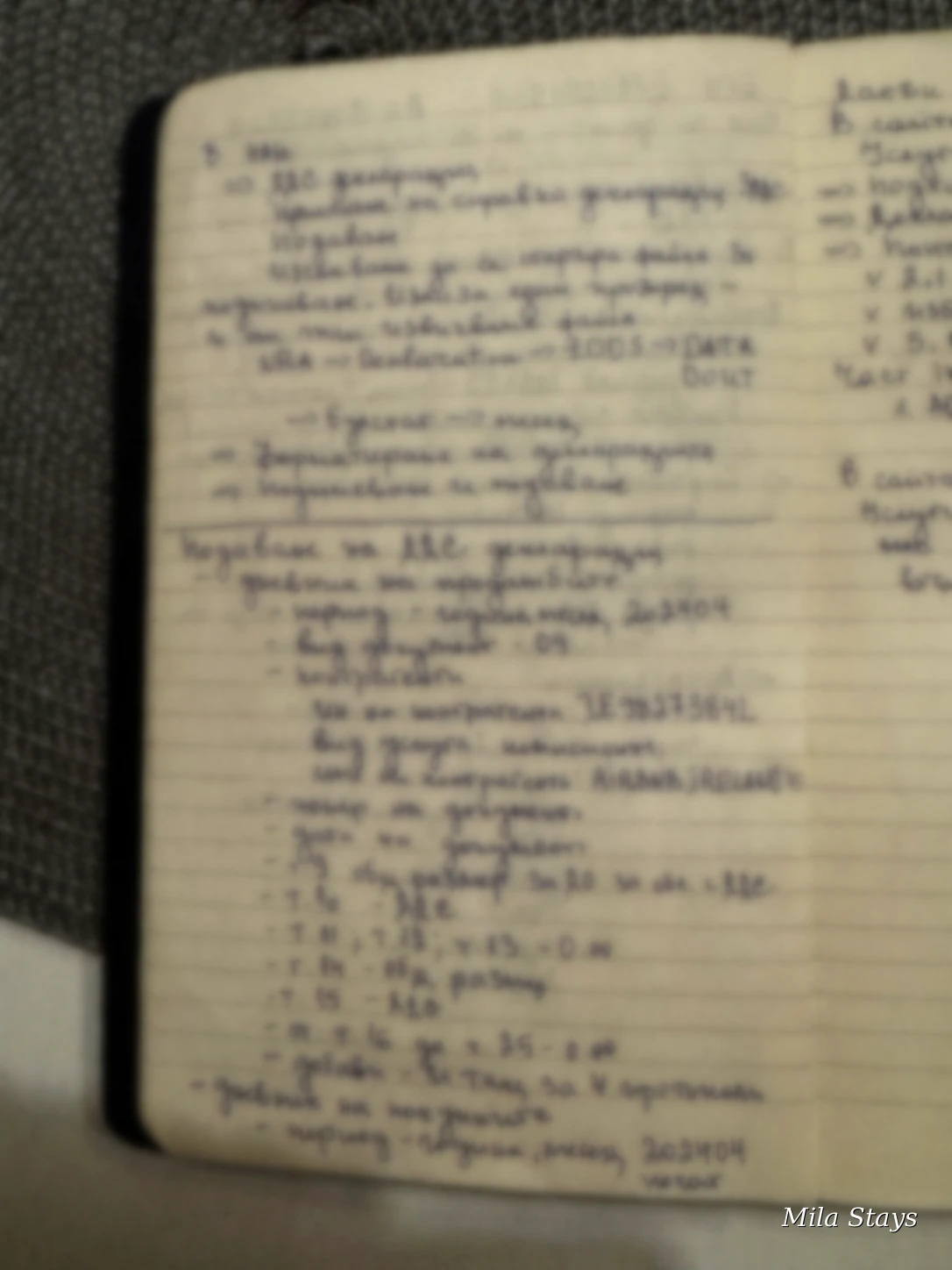
I had my own handwritten notes, and they were nearly always beside me. I would open them, go back a step, check everything one by one and slowly the process began to make sense.
Those notes became my little lifeline.
I made mistakes, too.
Some things, including BULSTAT and registration under Article 97a of the VAT Act, I understood later than I wish I had.
There were consequences, and I accepted them.
I put right what I had missed, completed the registrations I needed and carried on with a much clearer understanding of the process.
I don’t mind saying that, because it is part of my experience too.
I didn’t begin knowing everything.
I began, learnt, made mistakes, looked for the right answers and corrected what needed correcting.
Perhaps that is exactly why I care so much now about an owner knowing what comes next before accepting that first booking.
Rositsa from Plovdiv and Iva from Sofia
Once I realised things were not quite as straightforward as I had imagined, I started looking for information directly from the Bulgarian National Revenue Agency.
I spoke to different members of staff and was passed between people and departments, but whenever I could, I preferred to correspond in writing.
That way I had the information in front of me and could read it again whenever I became unsure.
That was when two women came into the picture, and I’m genuinely grateful to them — Rositsa from Plovdiv and Iva from Sofia.
They were patient enough not simply to tell me what I needed to do, but to help me understand how to do it in practice.
I learnt how to use the necessary software, create the files and submit my returns.
The first few times, it all felt like another language.
Now it is simply part of my routine.
Before Airbnb and Booking.com, the apartment needs to be registered.
Before we start welcoming guests, the apartment needs to be properly registered as tourist accommodation.
For an ‘apartment for guests’ in Bulgaria, this is a registration rather than a star categorisation. The property is registered with the municipality where it is located and a registration certificate is issued.
Then there is ESTI — Bulgaria’s Unified Tourist Information System.
Information about staying guests is submitted through the system.
This matters because it is easy to imagine the process like this:
‘I have an apartment, I take some photographs, put it on Airbnb and start.’
It is not quite that simple.
Then comes the question: how will the income be taxed?
There is no single answer that suits everyone.
When I started, I expected simply to pay the patent tax.
Then I realised that the first question is who is carrying out the activity and under what circumstances.
For an individual, short-term accommodation may fall within the patent-tax regime when the legal conditions are met.
If those conditions are not met, another form of taxation may apply.
And where the activity is carried out through a company, the rules are different again.
That is exactly why I would never tell someone:
‘I pay patent tax, so you should too.’
No.
The individual circumstances need to be considered first.
This is one of the points where I would recommend speaking to an accountant or checking directly with the Bulgarian National Revenue Agency rather than choosing a tax regime on the advice of a friend or a Facebook post.
There are also obligations to the local municipality, including tourist tax, which should be checked for the particular property and circumstances.
Then came BULSTAT.
In my case, the next important step was registration with the BULSTAT Register.
I registered as a self-insured person and received a Bulgarian Unified Identification Code, or EIK.
This was also an important part of putting my social-security position in order.
That was when I really began to understand that all these things are connected.
They are not separate documents you simply collect in a folder.
One step leads to the next.
And then Article 97a of the VAT Act appeared
After BULSTAT and receiving my EIK, my next step was registration under Article 97a of the Bulgarian VAT Act.
This was one of the things I had not expected at all when I began.
It arose because of the intermediary services provided by platforms such as Airbnb and Booking.com.
In my own case, the sequence was:
I registered with BULSTAT, received my EIK and then completed my Article 97a VAT registration.
That registration also brought regular VAT reporting obligations.
My reaction at the beginning was roughly:
‘Right… where did that come from?’
But once I understood how to do it, it gradually became part of my normal routine.
Social-security registration should not be forgotten either
Short-term accommodation through online platforms is not simply the same thing as an ordinary long-term tenancy.
For me, that meant sorting out my position as a self-insured person and beginning to submit the necessary returns.
Once again, having the steps written down helped enormously.
What do I submit?
When do I submit it?
Where was that file?
How exactly did I create it?
I checked.
Then checked again.
And with time everything became much clearer.
Not because there were fewer rules.
But because I knew the order.
I started with Airbnb
The first platform I chose was Airbnb.
It felt more personal to me and closer to the way I imagined sharing our apartment with guests.
At the time, I associated Booking.com mainly with hotels and hotel chains.
Airbnb felt more like a place where someone opens the door to their home and shares it with other people.
Perhaps that is why it felt natural to begin there.
For around six months, my apartment was listed only on Airbnb.
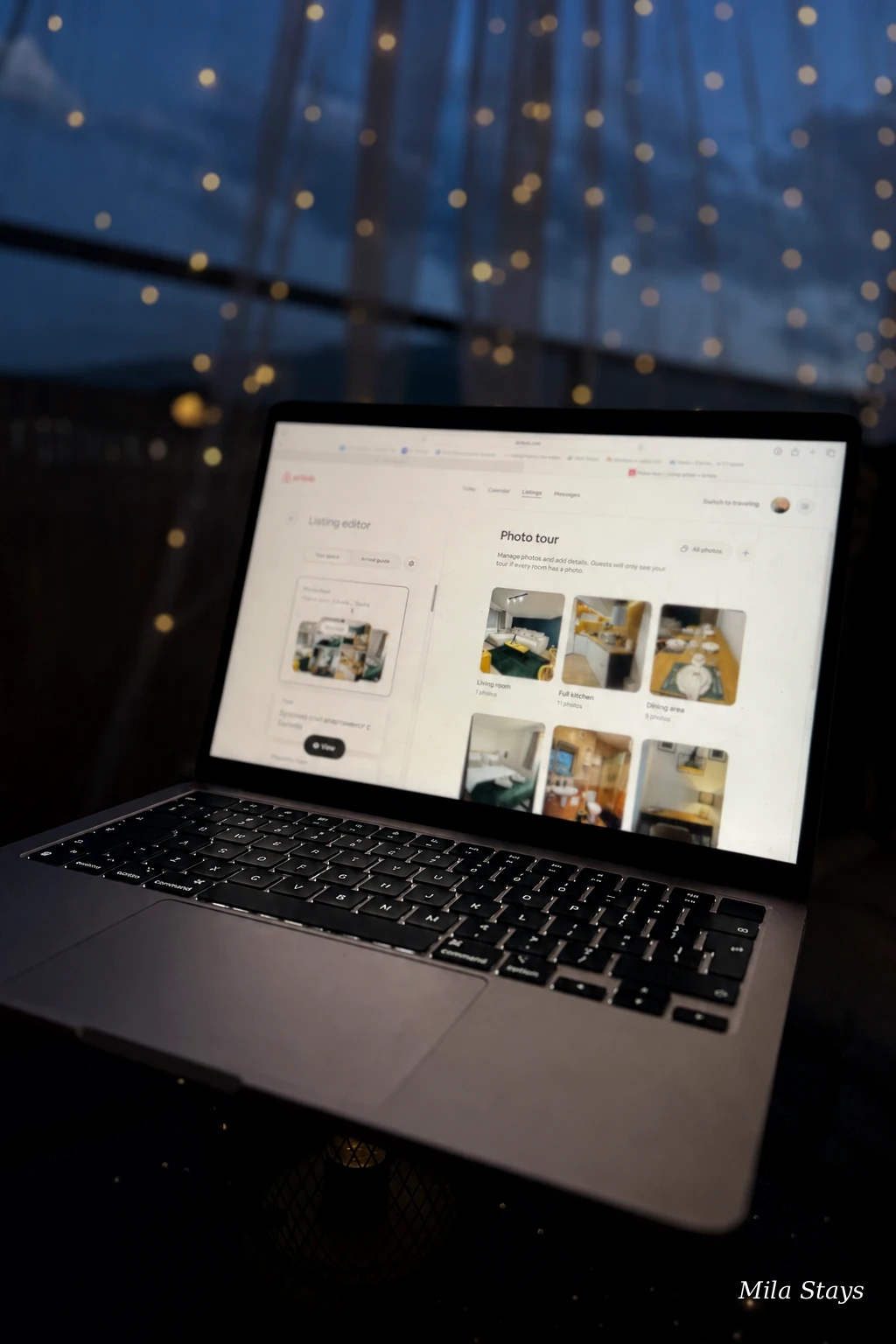
Creating the listing was not the difficult part
Creating the listing itself was not difficult for me.
The more complicated part was everything behind it.
How far ahead should the calendar be open?
Should I leave a day between bookings so there is enough time for cleaning?
How should I set the price?
How should the cleaning fee work?
What commission does the platform take?
What happens when two bookings follow one another?
I don’t think anyone learns all of that on day one.
I adjusted things.
I watched what happened.
Then I changed them again.
Gradually, I began to see what worked for me.
That is where I learnt that a listing is not something you publish once and forget about.
It develops alongside the way you work.
About six months later, I added Booking.com
Until then, I had associated Booking.com mainly with hotels and hotel chains.
Then I started looking at other properties on the platform and saw how many privately run apartments were there.
I realised my impression of Booking.com had not been quite right.
That was the main reason I decided to list our apartment there too.
Not because I disliked Airbnb.
I simply realised there was another place where guests could find us.
If I were starting today, I would make myself a checklist
I would probably go through much the same process.
The difference is that this time I would write the steps down on one sheet of paper before I started and tick them off one by one.
Register the apartment as tourist accommodation.
Set up ESTI.
Check which tax regime applies to the individual circumstances.
Check tourist tax and the obligations to the relevant municipality.
Register with BULSTAT and obtain an EIK where applicable.
Social-security registration.
Complete Article 97a VAT registration where applicable.
A qualified electronic signature where required.
Submit returns where required.
And only then — Airbnb, Booking.com, photographs, description, calendar and pricing.
I am not saying this to frighten anyone.
Quite the opposite.
I think the process feels most intimidating when you do not know what comes next.
Once the steps are in front of you and you work through them one by one, the whole thing begins to feel much more manageable.
Before the first booking
Today, this is what I would say to anyone preparing to start:
Don’t rush to press ‘Publish’.
Put the administrative side in order first.
Check how the apartment needs to be registered.
Understand ESTI.
Check how your income will be taxed.
Sort out BULSTAT, social-security and VAT requirements for your own circumstances.
Then open the calendar.
Because the first booking should be a moment you are happy about.
Not a moment when you suddenly think:
‘Hang on… have I actually done everything?’
I did not know everything at the beginning either.
I searched, asked questions, kept notes, made mistakes and sometimes checked the same thing several times.
When I realised I had missed something, I put it right and carried on.
And that is exactly what taught me how important it is not simply to start quickly, but to start prepared and calm.
Only then comes the nicest part — welcoming the first guest.
If you would like someone to organise this process alongside you, that is exactly what Mila Stays is here for.
Discuss your property